This worksheet reflects the same early thinking I guide clients through before we design a kitchen. Its purpose is to help you feel clearer and more confident before any decisions are made.
I use this approach with homeowners across Wirral, Cheshire, and Liverpool before we design anything.
You don’t need to have everything figured out before you start. Short notes, bullet points, or a few sentences are more than enough.
The aim isn’t to design your kitchen on your own, but to organise your thoughts so that when you do speak to a designer, the conversation feels productive and grounded.
Understanding Your Current Kitchen
What’s not working in your current kitchen:
What do you find most frustrating about your kitchen on a day-to-day basis?
When does the space feel awkward, cramped, or inefficient?
Are there things you tend to avoid doing because the kitchen doesn’t work as well as it should?
What feels dated, poorly thought through, or no longer suited to how you live now?
Don’t overthink this. Write down what regularly annoys you or slows you down.
How you actually use your kitchen:
Who uses the kitchen most on a typical day?
How often do you cook during the week?
Do you usually cook alone, or with others in the space?
How often do you have people over, and how does the kitchen get used when you do?
Aside from cooking, what else regularly happens in the kitchen?
Answer this based on real habits, not how you’d like to use the space.
Turning Inspiration Into Clear Direction
Before you answer the questions below
If you already have inspiration images saved (Pinterest, Instagram, screenshots), use those to answer the questions that follow.
If you don’t, take a few minutes to find 5–10 kitchen images you’re naturally drawn to. Don’t overthink it — just save what you like at first glance.
The goal isn’t to pick a finished design. It’s to spot patterns in what you’re drawn to.
1. What overall kitchen style are you drawn to?
Choose the option that best reflects the majority of your inspiration images.
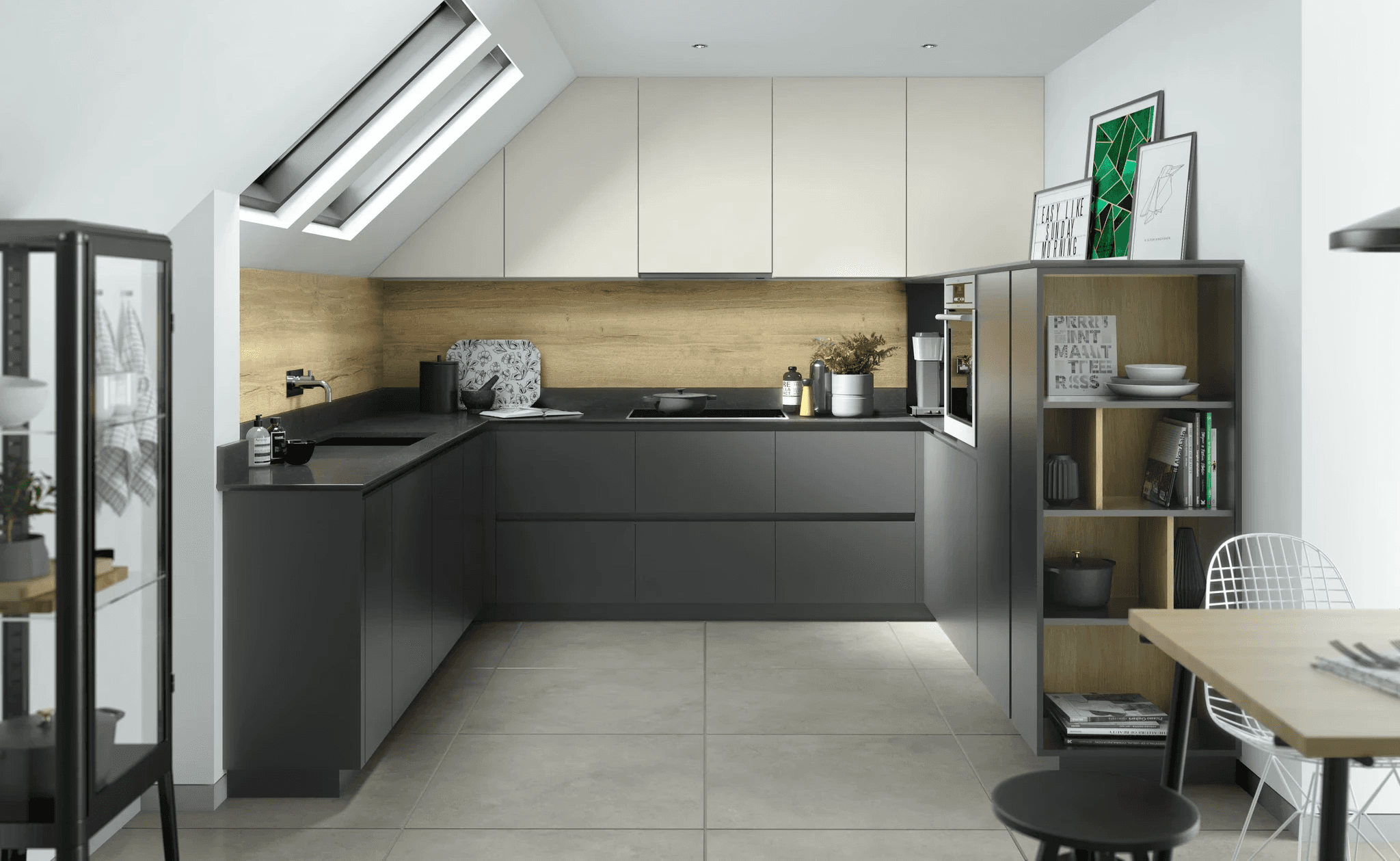
Modern & Minimal: Flat or very simple doors, little visual detail, uncluttered surfaces, and a strong sense of order.
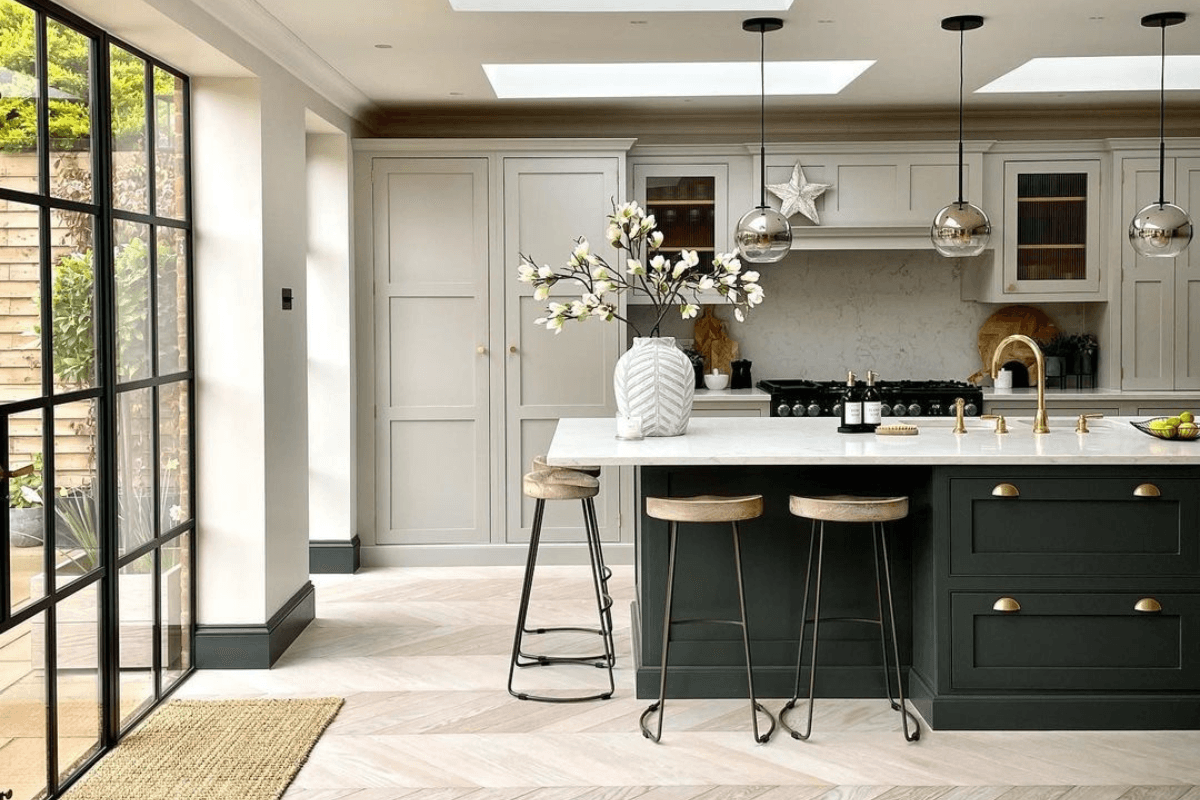
Classic / Shaker: In-frame & shaker doors, softer detailing, and a timeless, familiar look that doesn’t chase trends
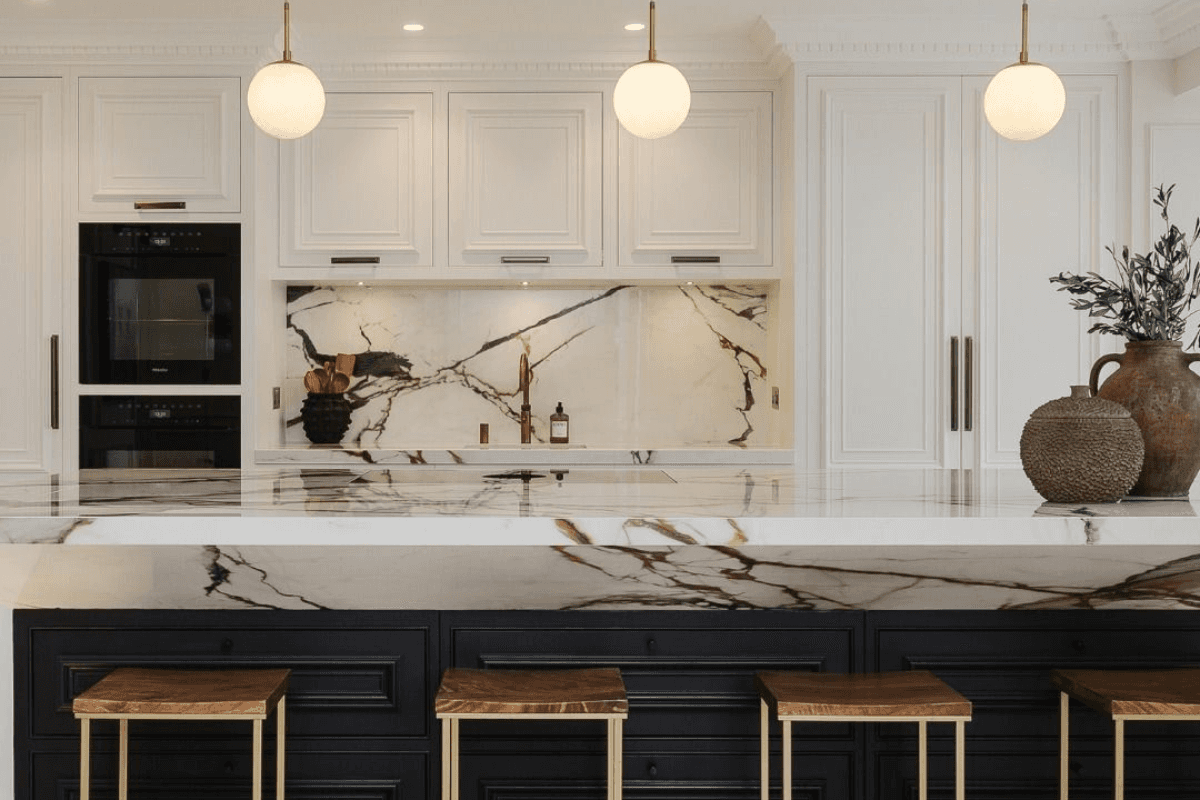
Luxury contemporary: Clean lines with visual interest. Strong contrasts, statement elements, and integrated design features that feel considered and high quality.
Modern Classic: Shaker doors paired with bold modern colours and paired with modern materials or details.
Warm Modern: Clean, modern kitchens softened with texture, natural materials, or warmer tones.
2. Which tones & materials are you most drawn to?
(Choose 1–2 options per category)
Kitchen doors: Matt painted, wood / wood-effect, lacquered gloss / smooth finish
Worktops: Quartz, granite / natural stone, timber
Wall colours: Soft neutrals (off-white, greige, warm grey), dark tones (charcoal, deep green, navy), muted colours (taupe, clay, sage)
Handles & hardware: Brushed metal (brass, bronze), black / dark metal, minimal or handleless
Additional finishes: Open shelving, feature panelling, glass elements (reeded, fluted, glazed)
Example: “We’re drawn to matt painted doors, light quartz worktops, soft neutral walls, and brushed brass hardware.”
3. Which parts of a kitchen matter most to you visually?
(Select your top 1-2)
Cabinetry
Worktops
Island
Lighting
Appliances
Storage solutions
This helps identify where visual emphasis should sit in the design.
What Matters Most in Your New Kitchen
Non-negotiables vs nice-to-haves
What does your new kitchen absolutely need to include for it to work well day to day?
Are there any features or elements you would be genuinely disappointed to miss?
What would be nice to have, but you could live without if needed?
Where would you prefer to invest quality or budget, and where are you more flexible?
There are always trade-offs in kitchen design. Being clear on priorities early helps avoid regret later.
Before You Take the Next Step
When planning a new kitchen, it’s important to be clear on what really matters to you.
Every kitchen involves compromises. Knowing your priorities early helps ensure the things that matter most aren’t lost along the way.
Go through the questions below and write a single list of what you want from your new kitchen.
Once you’ve done that, number each item in order of importance.
Your top 3 are your non-negotiables
Everything below that becomes nice-to-haves
Questions to help you build your list:
What does your new kitchen need to include for it to work properly day to day?
What features, layouts, or elements would you be genuinely disappointed to miss?
What would significantly improve how you use or enjoy the kitchen?
What would be nice to include, but isn’t essential if compromises are needed?
This isn’t about final decisions. It’s about understanding what matters most so the design can be shaped around it.
If you’ve worked through this worksheet, you’re already further along than most people at this stage.
You should now have:
A clearer understanding of what isn’t working in your current kitchen
A sense of the style and look you’re drawn to
A short list of what truly matters most to you
It’s completely normal if some decisions still feel unclear.
That’s not something you need to solve on your own.
The next step is a design conversation where everything you’ve written down can be reviewed, challenged where needed, and shaped into a kitchen that works properly for you and your home.
If you’re ready to talk it through, enter your details below and we’ll arrange a call at a time that suits you.
A short design conversation to talk through your space, sense-check your ideas, and see how everything you’ve noted works in your home.
WHY CHOOSE SAM WAITE KITCHES